
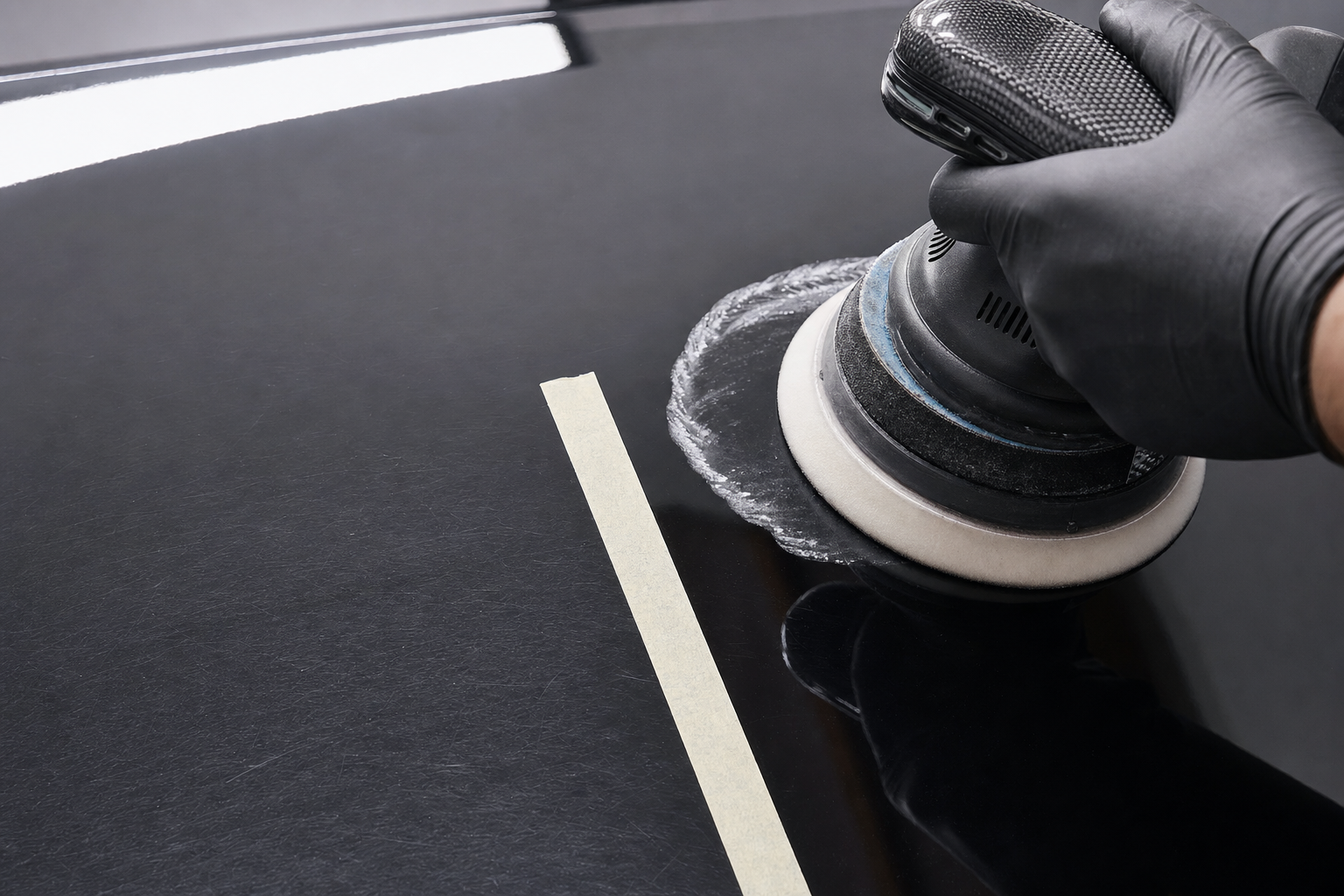
Why correction needs judgement, not guesswork
Reflection brought back
Polishing reduces defects that cloud the gloss and dull reflected light.
Correction matched to paint
Single-stage or deeper work depends on defect depth and paint condition.
Honest expectations matter
Some marks improve well, while deeper defects may not polish out completely.
Reducing the marks that dull the finish
Paint correction is about improving what is already there by reducing the defects that dull it down. Swirl marks, haze, oxidation and light surface blemishes all interfere with gloss and the way light reflects across the paint. In Manchester, we start with inspection, washing, decontamination and paint assessment before machine polishing begins. Cars brought to Najmat Bodywork are treated according to paint condition, because correction only works well when the polishing stage is matched to the level and type of defect on the surface.
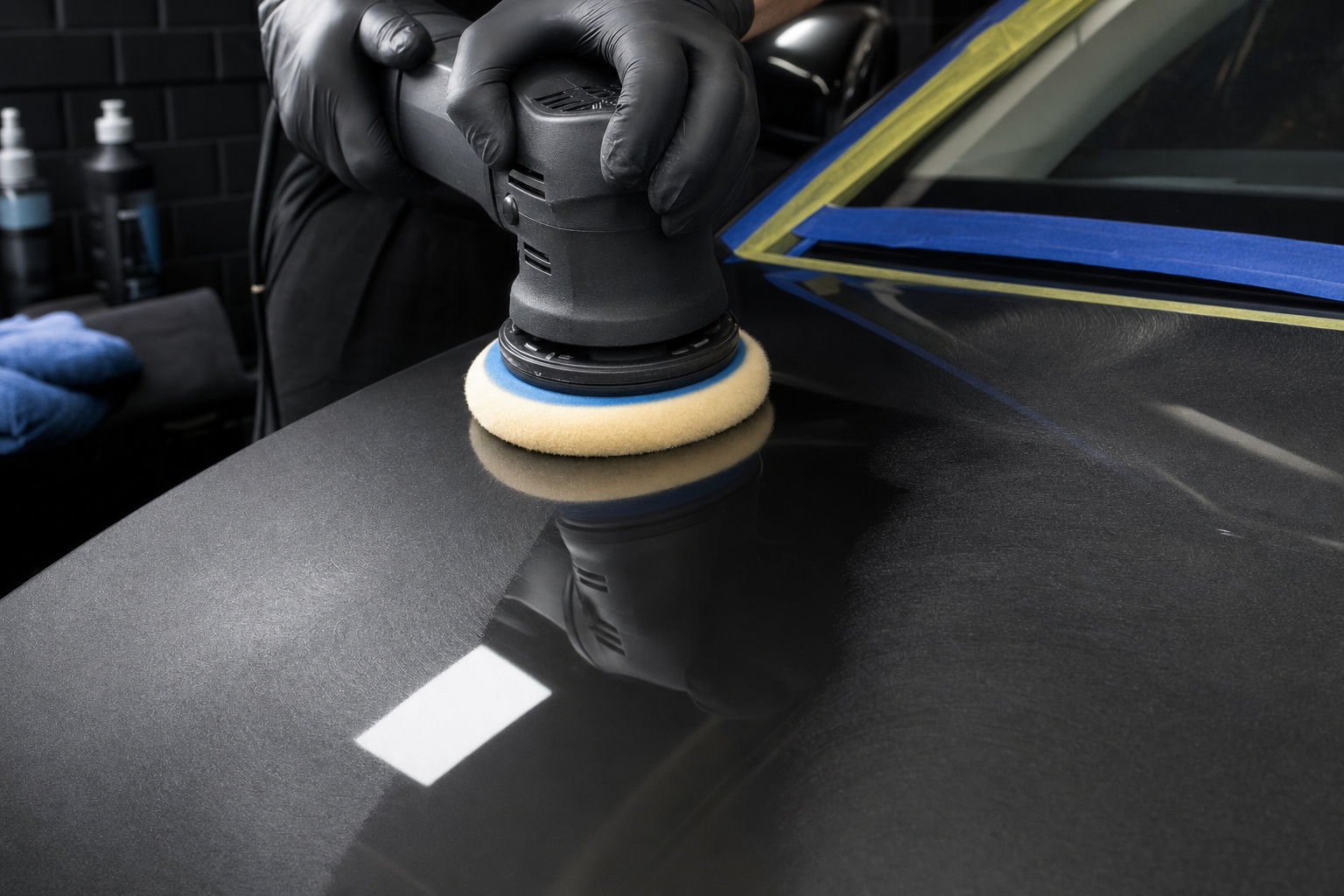
Choosing the right level of polishing work
Some vehicles respond well to a single-stage enhancement, while others need a deeper correction approach to make a worthwhile difference. The right level depends on defect depth, paint thickness and the finish already on the car. With Najmat Bodywork, we focus on cleaner reflections, better clarity and stronger gloss while staying honest about what polishing can and cannot remove. If a mark runs through the paint layers, it may improve, but no amount of machine work can pretend it was never there.
Frequently asked questions
What kinds of marks can paint correction reduce?
It is most useful for swirl marks, oxidation, haze and light surface defects that sit within the upper layers of the finish. Those are the problems that usually rob paint of gloss and clean reflection.
How do you know if single-stage or deeper correction suits the paint?
We inspect the condition first. Lighter defects may respond well to a single-stage enhancement, while heavier swirling or dullness can justify more intensive polishing. The paint itself decides the level, not wishful thinking.
Will every defect disappear completely?
No, and it is better to be honest about that. If a defect runs deep through the paint layers, polishing may improve it but cannot always remove it completely. The aim is meaningful improvement, not tall tales.