
What makes paintless repair the right choice
Original paint preserved
Suitable dents can be worked back without sanding, filling or repainting.
Access decides a lot
The panel structure has to let us reach and manipulate the dent in a controlled way.
Suitability checked first
Intact paint, limited stretch and dent shape all influence whether PDR makes sense.
When the original paint can stay in place
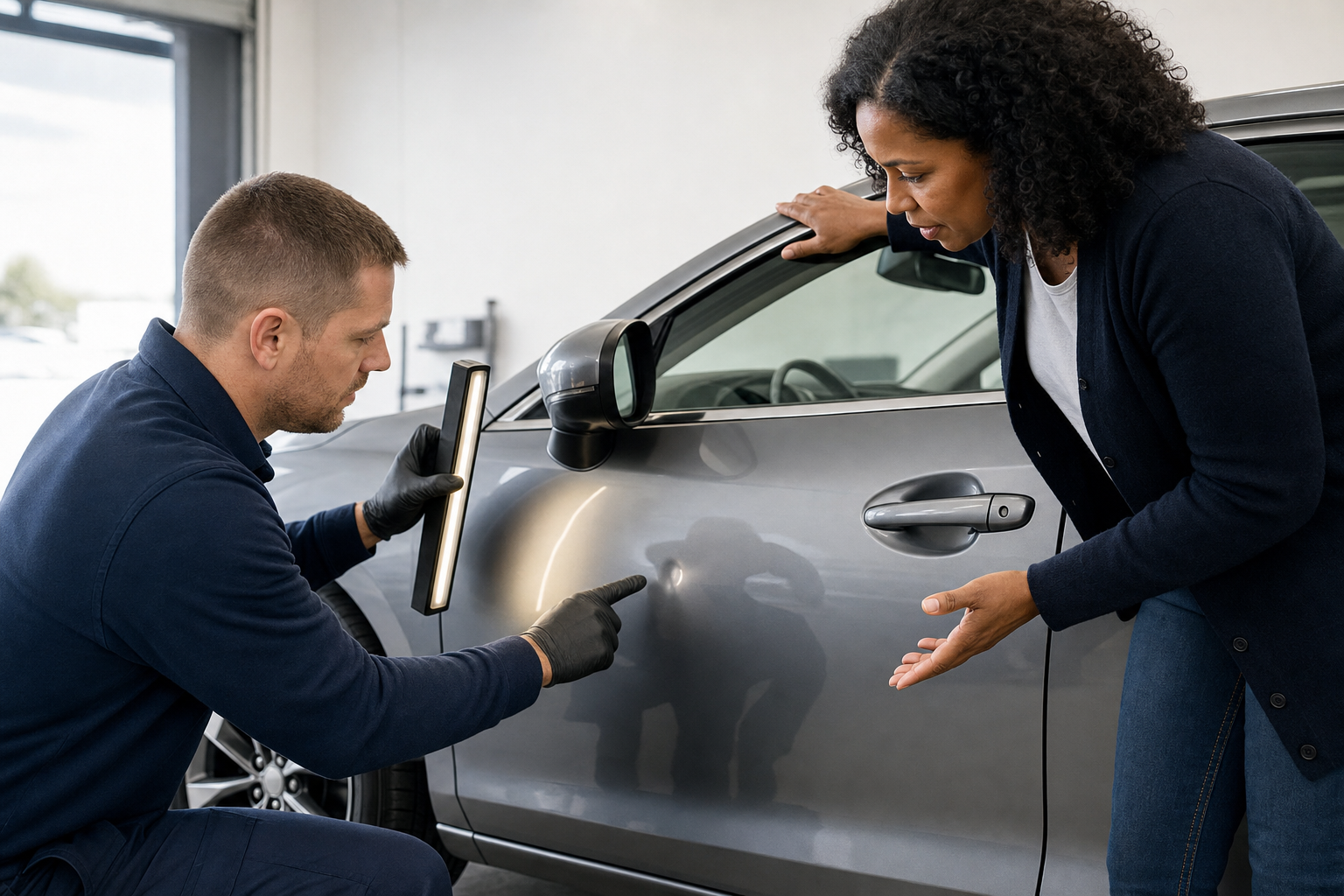
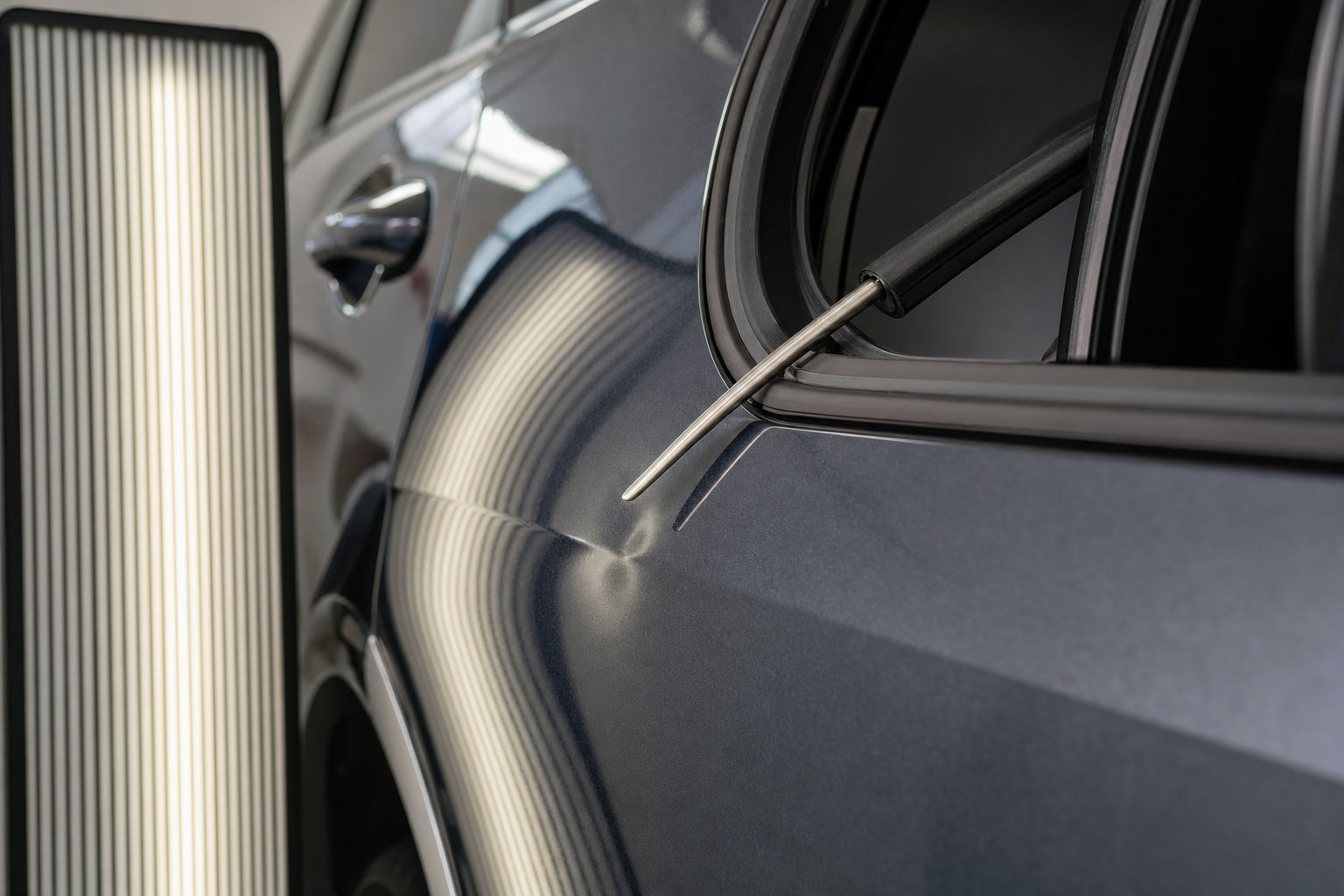
Paintless dent repair is the neat answer when a dent is suitable and the original paint can stay in place. Instead of sanding, filling and repainting, we access the panel and use controlled metal manipulation to work the damage back as closely as possible to its original shape. In Manchester, we check paint condition, dent shape, panel access and signs of metal stretch before we decide if this route is realistic. Dents brought to Najmat Bodywork only go down the paintless route when the panel gives us a fair chance of achieving a clean result without creating bigger issues.
Why suitability matters more than speed
The main benefit is obvious: we can preserve the factory finish on the right type of dent and avoid unnecessary refinishing work. That said, paintless repair is not a magic trick for every mark. Sharp creases, broken paint and severely stretched panels usually point us toward conventional repair instead. With Najmat Bodywork, suitability comes first, because the best outcome is not the cleverest sounding method. It is the one that fits the dent, the panel and the finish already on the car.
Frequently asked questions
Which dents usually suit paintless repair?
The best candidates usually have intact paint, manageable depth, limited metal stretch and panel access that lets us work the dent carefully from behind or through a suitable route. Smooth damage tends to respond better than sharp folds.
When does a dent stop being a good PDR candidate?
Broken paint, sharp creases, awkward access and severely stretched metal can all rule it out. In those cases, trying to force a paintless repair often wastes time when conventional dent work would give the cleaner result.
Why does access behind the panel matter?
Because paintless repair depends on controlled manipulation of the metal. If the structure behind the dent does not give proper access, the chances of working the panel back accurately and safely drop off very quickly.